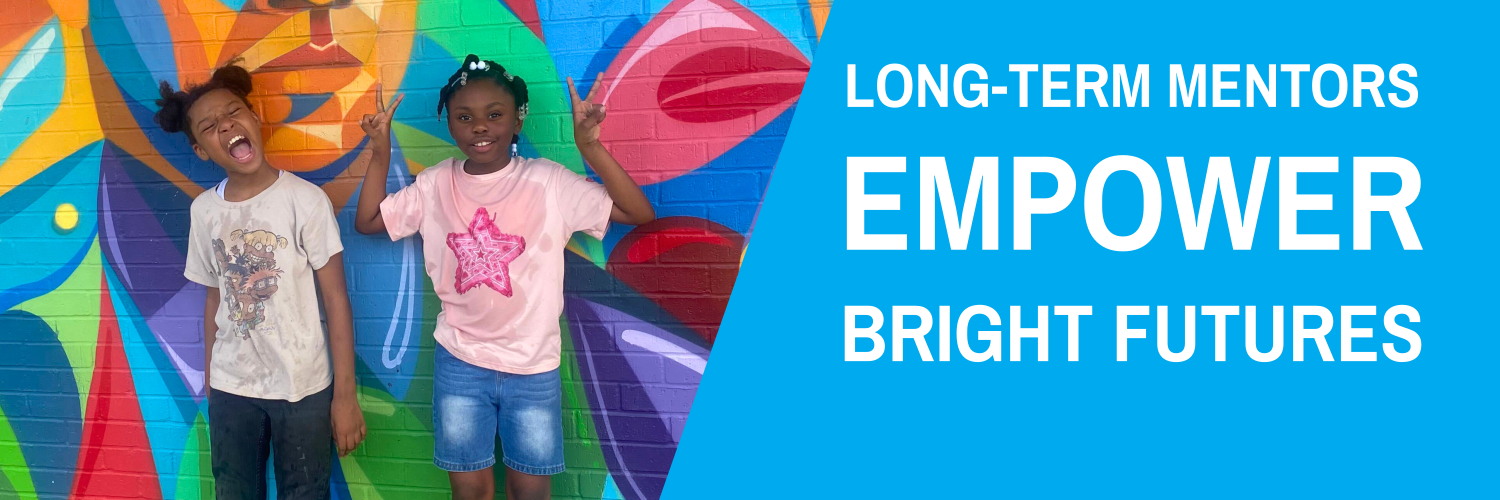
Friends of the Children is working to address our nation's unprecedented youth mental health crisis.
For over 30 years, our model has specialized in serving children and families with significant barriers like cost, transportation and provider shortages, that make it hard to access health and mental healthcare. Friends provide healing centered services for 3-4 hours each week at home, at school, and in the community, promoting protective capacities and expanding the continuum of mental health support.

We want every child in our program to recognize their own unique abilities, have the skills to navigate life's challenges, succeed in school, and have a plan for the future.
Unfortunately, exposure to adversity—poverty, violence, substance use in the home—can increase the likelihood that a young person will experience a mental health challenge. By the time we meet them between the ages of 4-6, children in our program have experienced on average four adverse childhood experiences (ACEs).
Our paid, professional mentors represent the communities and experiences of the youth they serve. Using a healing-centered approach, Friends also work to ensure that children enrolled in our program know who they are and have the tools not just to survive but to thrive.


Investment in paid, professional mentoring increases the number of youth receiving evidence-based and healing-centered services while also reducing the burden on existing systems of care.
The Friends of the Children model improves the mental, emotional, and behavioral health of youth in our program. Friends are equipped to promote well-being and to intervene when mental health challenges occur.
BUILDING WELL-BEING + CONNECTION
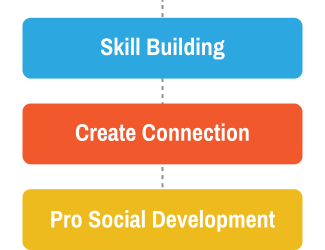
Throughout a young person’s 12+ years in our program, Friends work within an intentional framework that includes structured relationship and skill-building. In the younger years, Friends help children process emotions, work through change and practice coping skills that promote healing. As youth get older, Friends create safe spaces for youth to feel seen. They also build community through activities, community engagement and peer connections. A randomized controlled trial (RCT) study of our impact in the early years showed that children with a Friend were more likely than their peers to exhibit pro-social behaviors, like empathy or cooperation and were less likely than their peers to exhibit anti-social behaviors, like aggression or bullying.
IMPROVING ACCESS TO SUPPORTS
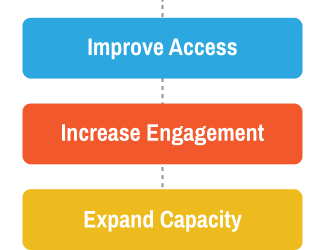
Friends are highly trained and supervised. Leveraging evidence-based practices from child and adolescent mental health, Friends implement actionable strategies that are individually tailored for youth with mental health challenges. For example, Friends use Motivational Interviewing to empower hope and change, practice mindfulness to help with emotional regulation, and teach strategies to manage anxiety. Friends also increase access to specialized supports when needed and increase engagement for young people who need services but who might otherwise be reluctant to access them. Finally, Friends across our network consult regularly with clinical practitioners who provide real-time coaching in their work supporting the mental health of youth and families.
The intentional work of our professional mentors makes a difference. With the help of a Friend, we know that:
91% of youth made progress on social and emotional development, such as asking for help from a caring adult and practicing healthy ways to cope with stress.
91% of youth in the program report accomplishing something they are proud of.
96% of youth did not self-harm last year.
90% of youth practiced positive relationship skills.
88% practiced persistence/grit, and 81% reported or demonstrated healthy coping skills.
89% of youth felt hopeful about their future.
70% of youth who needed counseling services received them.
Our program staff, including our family engagement specialist, are trained and certified in Mental Health First Aid through the National Council for Mental Wellbeing. This training gives us practical strategies and tools to respond when mental health challenges arise.
We stay grounded in trauma-informed care through ongoing training and close partnerships with mental health agencies and providers across our community. And because young people thrive when their families are supported too, we extend this care to the whole family.